
Appearance
Compute Services: Diagrams
Text-based diagrams for the core concepts introduced in Part 01.
Computed<T> Lifecycle States

Capturing Computed<T> Values
| Call | Returns |
|---|---|
await counters.Get('a') | int (value only) |
await Computed.Capture(() => counters.Get('a')) | Computed<int> |
Computed<T> API:
| Property/Method | Returns |
|---|---|
.Value | int |
.IsConsistent() | bool |
.Invalidate() | void |
.Update() | Task<Computed<T>> |
.WhenInvalidated() | Task |
.When(predicate) | Task<Computed<T>> |
.Changes() | IAsyncEnumerable |
.Invalidated | event |
Invalidation Block Behavior
csharp
using (Invalidation.Begin()) {
    _ = Get(key);  // Does NOT execute method body
}| Behavior | Description |
|---|---|
| Method body | Does NOT execute |
| Return value | Task.FromResult(default(T)) or default(T) |
| Side effect | Invalidates cached Computed<T> for this call |
Computed Value Dependency Graph (DAG)
Example from PartF: Sum("a", "b") depends on Get("a") and Get("b").

Cascading Invalidation Flow

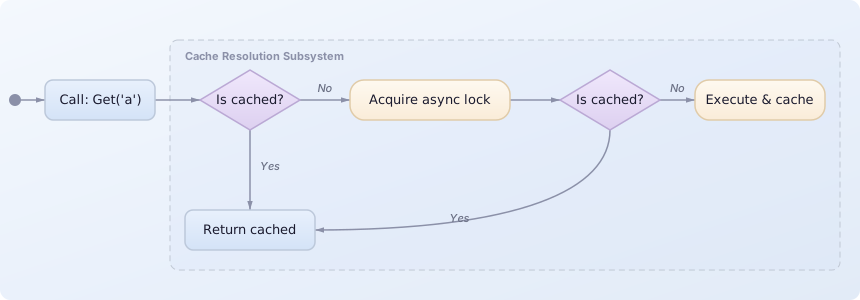
Compute Method Cache Resolution
State<T> Inheritance Hierarchy

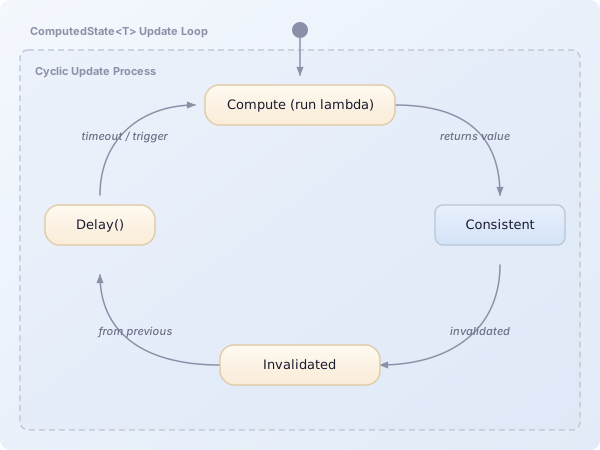
ComputedState<T> Update Loop
MutableState<T> vs ComputedState<T>
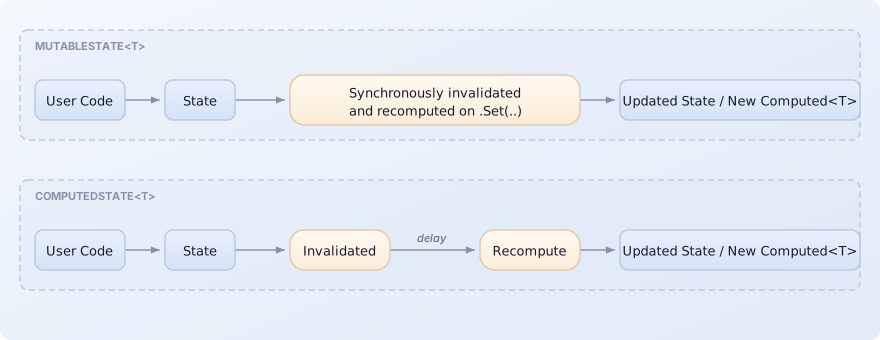
| MutableState<T> | ComputedState<T> |
|---|---|
| Use case: UI input state (e.g., search box text) | Use case: Derived/reactive values (e.g., filtered list, totals) |