
Appearance
Interceptors and Proxies: Diagrams
Diagrams for the concepts introduced in Interceptors and Proxies.
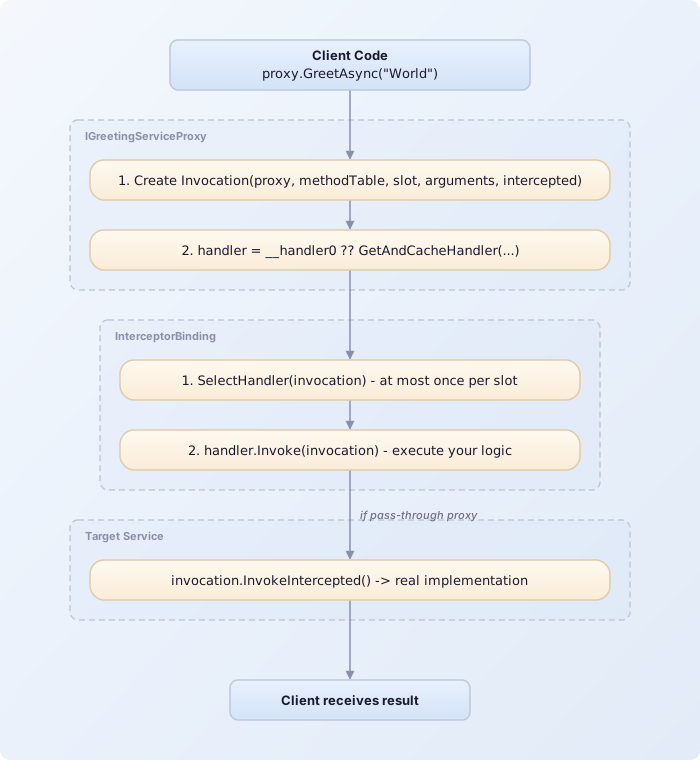
Proxy Call Flow
How a method call flows through the proxy system:
Proxy Generation at Compile Time

Proxy Type Hierarchy

Generated Proxy Fields
| Field | Type | Purpose |
|---|---|---|
__methodTable | ProxyMethodTable (static) | Slot-indexed MethodInfo table shared by all instances of the proxy type |
__binding | InterceptorBinding? | Binds the interceptor to the method table; shares resolved handlers across proxy instances |
__handler0 | Func<Invocation, object?>? | Per-slot handler cache, filled on the first call |
__cachedIntercepted0 | Func<ArgumentList, Task<string>> | Cached delegate to target |
ProxyTarget | object? | Real service (from InterfaceProxy) |
Invocation Structure
| Field | Description |
|---|---|
Proxy | The proxy instance (e.g., IGreetingServiceProxy) |
MethodTable, MethodIndex | Table-qualified slot of the called method (ProxyMethodRef via MethodRef); the index is validated against the table in the constructor |
Method | MethodInfo of the called method, resolved as MethodTable.Methods[MethodIndex] |
Arguments | ArgumentList containing method arguments |
InterceptedDelegate | Delegate to call the real implementation (for pass-through) |
InterfaceProxyTarget | The real service instance |
ArgumentList Variants
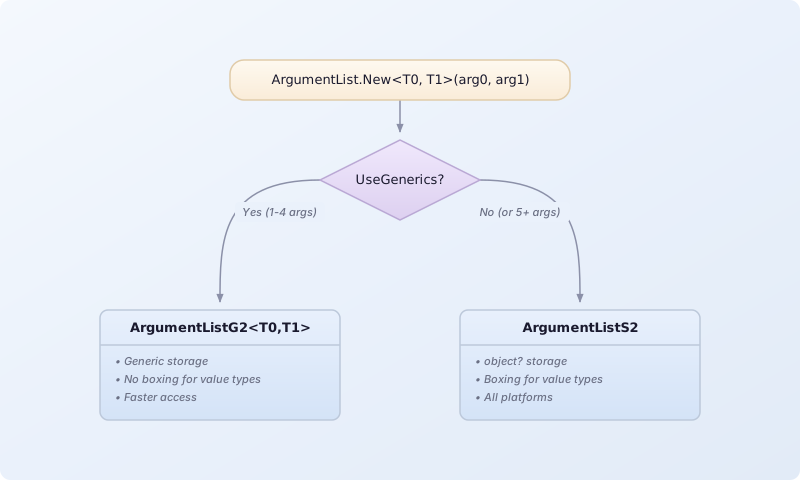
| Count | Generic Type | Simple Type |
|---|---|---|
| 0 | ArgumentList0 | ArgumentList0 |
| 1 | ArgumentListG1<> | ArgumentListS1 |
| 2 | ArgumentListG2<,> | ArgumentListS2 |
| 3 | ArgumentListG3<,,> | ArgumentListS3 |
| 4 | ArgumentListG4<,,,> | ArgumentListS4 |
| 5-10 | (uses Simple) | ArgumentListS5-S10 |
ArgumentList Methods
| Method | Description |
|---|---|
.Get<T>(index) | Get argument at index |
.GetCancellationToken(index) | Get cancellation token |
.Set<T>(index, val) | Set argument value |
.Length | Number of arguments |
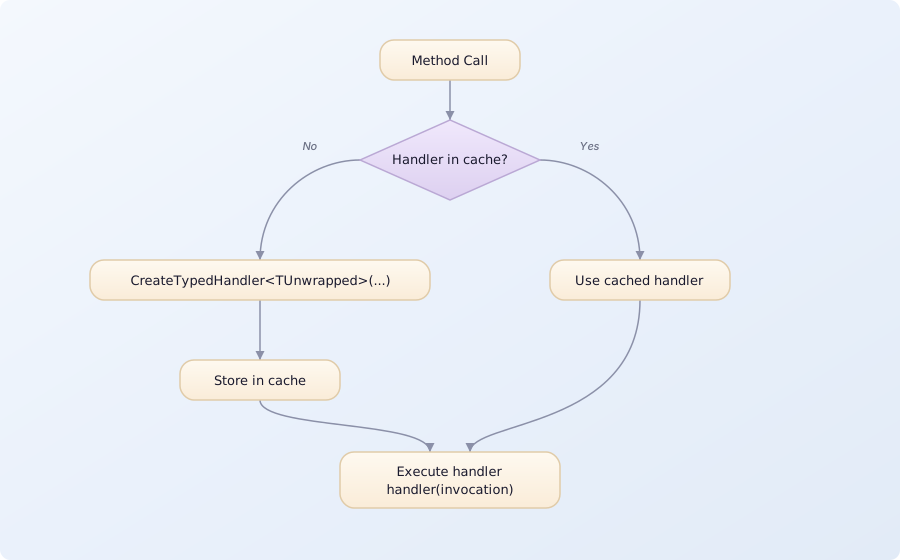
Handler Caching
Handlers are cached at two levels: each proxy instance caches the resolved handler per method slot in a dedicated field, and the InterceptorBinding shares resolved handlers across all proxy instances using the same (interceptor, method table) pair. The interceptor is bound just once, right after the proxy construction, so both caches only ever go from unresolved to resolved. Interceptor.SelectHandler runs at most once per slot; a slot the interceptor leaves unhandled caches the InterceptorBinding.NoHandler marker, which generated proxies detect by reference to invoke their typed original-call delegate directly (no boxed results).
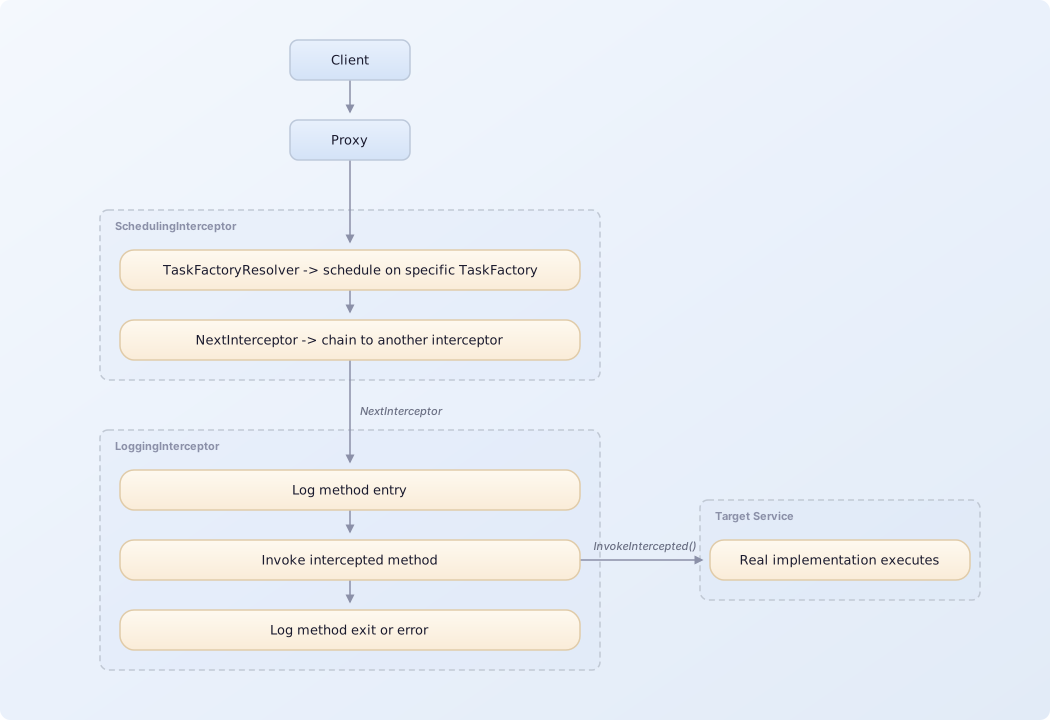
Interceptor Chain
Multiple interceptors can be chained together:
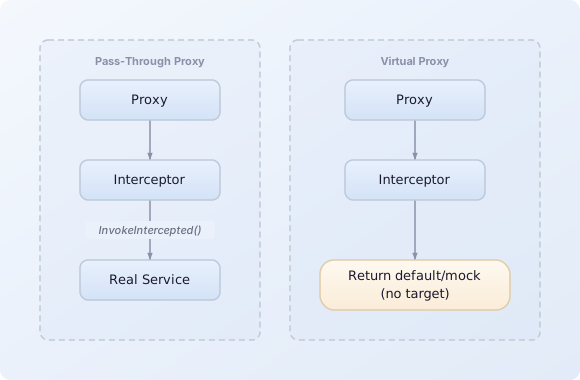
Pass-Through vs Virtual Proxy
| Aspect | Pass-Through Proxy | Virtual Proxy |
|---|---|---|
| Creation | Proxies.New(typeof(IService), interceptor, proxyTarget: realService) | Proxies.New(typeof(IService), interceptor) |
| ProxyTarget | != null | == null |
| Flow | Proxy → Interceptor → InvokeIntercepted() → Real Service | Proxy → Interceptor → Return default/mock |
| Use cases | Logging, Metrics, Caching, Retry logic | Mocking/Stubs, Default values, RPC client proxies, Lazy initialization |
Typed vs Untyped Handlers
| Aspect | Typed Handlers (Default) | Untyped Handlers |
|---|---|---|
| Method | CreateTypedHandler<TUnwrapped>(invocation, methodDef) | CreateUntypedHandler(invocation, methodDef) |
| Setup | Default behavior | UsesUntypedHandlers = true in constructor |
| Return type | TUnwrapped (e.g., string for Task<string>) | object? |
| Performance | One handler instantiation per unique return type | No generic instantiation overhead |
| Use case | Most use cases | ComputeServiceInterceptor for max performance |
MethodDef Key Properties
For Task<string> GreetAsync(string name, CancellationToken ct):
| Property | Value |
|---|---|
MethodInfo | GreetAsync |
FullName | "MyNamespace.IGreetingService.GreetAsync" |
ReturnType | typeof(Task<string>) |
UnwrappedReturnType | typeof(string) |
IsAsyncMethod | true |
ReturnsTask | true |
ReturnsValueTask | false |
IsAsyncVoidMethod | false |
CancellationTokenIndex | 1 |
Parameters | [name: string, ct: CancellationToken] |
Helper Methods
| Method | Description |
|---|---|
DefaultResult | Completed Task with default(T) |
WrapResult(value) | Task.FromResult(value) |
WrapAsyncInvokerResult(task) | Proper Task<T> or ValueTask<T> |
InterceptedAsyncInvoker | Func<Invocation, Task<T>> |
TargetAsyncInvoker | Func<object, Args, Task<T>> |
See Also
- Interceptors and Proxies - Main documentation
- ArgumentList API - Working with method arguments
- Proxy Generation - Source generator details
- Built-in Interceptors - Ready-to-use interceptors
- Cheat Sheet - Quick reference